
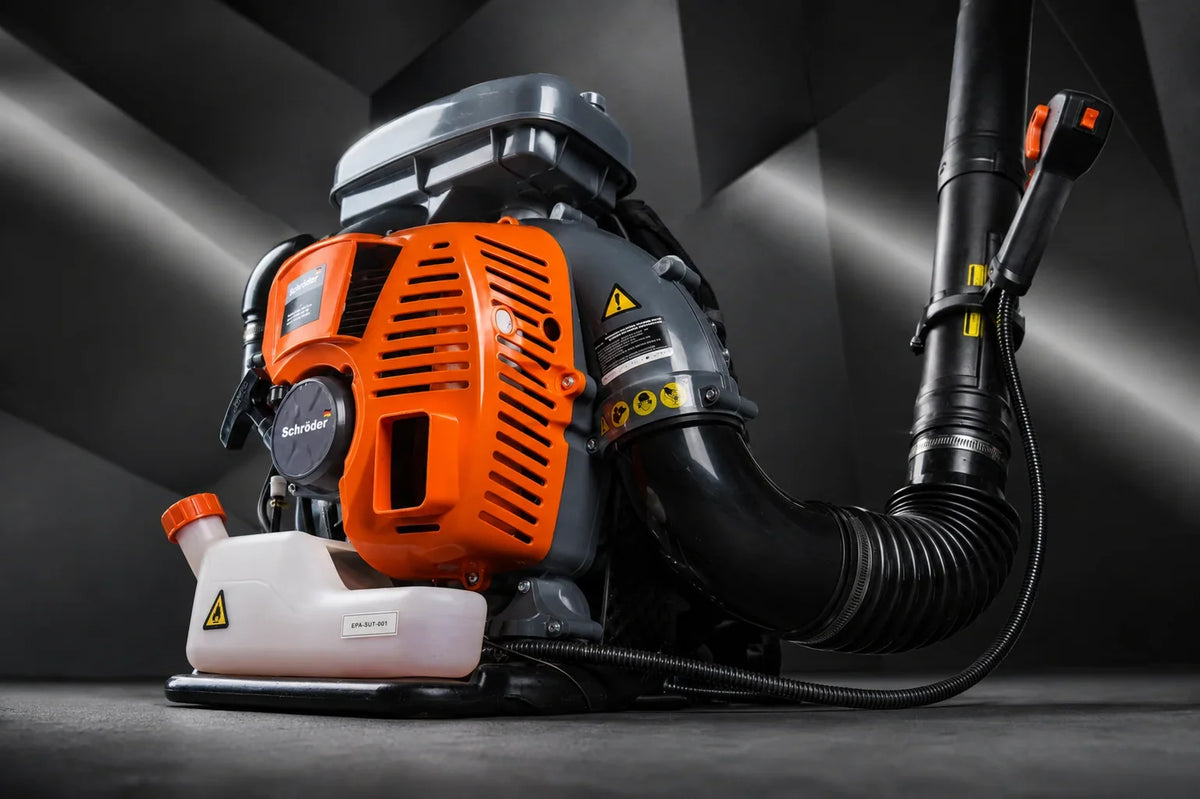
Leaf blower winter storage starts before you close the shed for the season. Make a model-specific fuel plan, finish the cleaning and inspections in the manual, and choose a secure place for the machine. Write down what you have done so the next start does not depend on memory.
For Canadian owners, the gap between the final leaf cleanup and the next regular use may be long. The useful question is not simply “Will it be cold?” It is “How long will the machine sit, what does its manual require, and what needs attention before I use it again?”
Plan the last use instead of guessing later
Decide whether you are putting the blower away for an extended break or expecting occasional use. Then find the storage instructions for the exact model. A general checklist can organise the work, but it cannot determine the correct fuel treatment or servicing procedure for every engine.
Put the manual, model number and purchase record together. If you cannot find the instructions, contact Canadian support before the last session. Asking while the machine and its paperwork are in front of you is easier than reconstructing the details months later.
Do not borrow another machine's fuel routine
Follow your manual's guidance for extended storage, including the fuel system. Do not assume that advice for a mower, a four-stroke engine or a different brand applies to your two-stroke blower. Schröder's equipment-care guide points owners to manufacturer instructions for seasonal storage and the recommended fuel and oil.
If a fuel product is required, check that it is suitable for your model and follow its label. Do not guess a dose or mix ratio from a short social-media clip. If the instructions are unclear or conflict, stop and ask support rather than combining procedures.
Keep any engine running outdoors
A brief run in the garage is still an indoor run. Health Canada's carbon monoxide guidance says outdoor fuel-burning equipment must not be operated in a garage or shed. Follow the manual and keep any required running step outside.
Finish the season with a clear inspection
With the engine stopped, cooled and secured against accidental starting as instructed, check the exterior, tubes, harness and controls. Clean the machine only by the method in the manual. Note damage rather than assuming the next user will notice it.
Make a short list of parts or service still needed. If something is unsafe, clearly mark the machine as not ready for use and arrange the appropriate help. Winter storage is not a repair; a problem left unresolved is still a problem when the machine comes back out.
- Model & manualRecord the exact equipment and where its instructions are kept.
- Fuel procedureWrite down the manual-based storage work you completed.
- ConditionList repairs or replacement parts still needed.
- Next checkLeave a reminder to inspect before the next start.
Choose a secure, organised storage space
Use a location permitted by the manual and local fire-safety requirements for fuel-powered equipment. Keep the blower protected from weather, secure from children and positioned so it cannot tip or be damaged by other stored tools. Do not use the fuel tank, tube or controls as a shelf for other equipment.
Keep fuel in approved containers and follow the container label and local storage rules. If you need to dispose of unwanted fuel, check the municipality's household hazardous-waste instructions. Do not pour it into a drain, onto the ground or into a normal rubbish container.
| Before storage | Before the next use |
|---|---|
| Read the model's storage instructions. | Read the model's starting and inspection instructions. |
| Complete the required fuel procedure. | Confirm the fuel is suitable for use under the manual's guidance. |
| Document damage or service needs. | Resolve those issues before starting. |
| Store securely with records accessible. | Check that the machine and its controls are in safe condition. |
Do a fresh check when the season changes
Do not assume the machine is ready simply because it ran at the end of autumn. Review your notes, inspect it using the manual and complete any outstanding service. Our backpack blower maintenance checklist can help organise the inspection.
If you share equipment, make the notes visible to the next operator. “Ready to use” should mean the required checks have been completed, not only that someone put the machine back in its usual place.
Common storage questions
Should every blower be stored with an empty tank?
Do not apply one universal rule. Use the storage procedure for your exact model and fuel system. Ask support if the supplied instructions are missing or unclear.
Can a setup video replace the manual?
No. The video library is useful supporting material, but check the model shown and follow the manual supplied with your machine.
Need a replacement before next season? Start with the blower parts collection and confirm compatibility before ordering.