
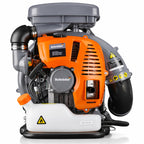
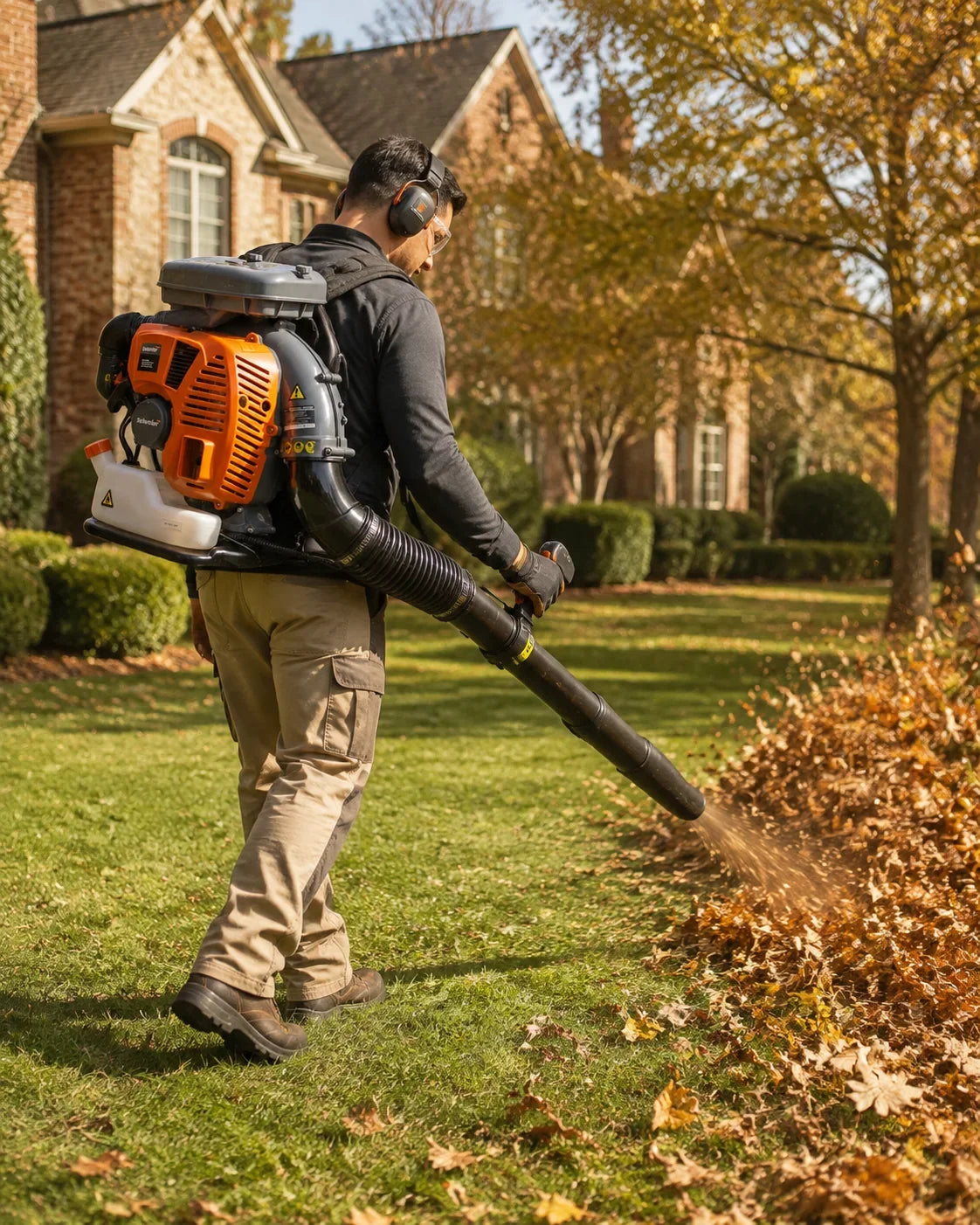
Blowing wet leaves works best as a collection job, not a battle with one enormous pile. Decide where the leaves should finish, break the area into manageable sections, and work the edge of the material. If a saturated mat will not move cleanly, stop and loosen it with a rake rather than repeatedly blasting the same spot.
In a Canadian autumn, the next dry afternoon does not always line up with your free time. You can still make a useful plan for a damp yard. The aim is controlled movement with a sensible finish—not sending leaves from one corner to another until the light runs out.
Assess the surface as well as the leaves
Walk the area first. Look for slippery patches, small stones, toys, branches and anything you do not want to move with the leaves. A damp paved path and a soaked lawn are different working surfaces. If footing is uncertain, postpone that section instead of treating the blower as a reason to push through.
Use the protective equipment and operating precautions in your model's manual. CCOHS recommends keeping people and pets clear and directing debris away from people, glass and other hazards in its leaf blower guidance. Never direct material towards traffic or a neighbour's property.
Choose an appropriate job
Leaf cleanup is not the same as clearing unknown dust or contaminated debris. Do not use a blower on ash left by a wildfire. CCOHS specifically cautions against equipment that raises dust in its post-wildfire cleanup guidance.
Choose the finish point before making the first pass
Decide whether you are collecting into approved yard-waste bags, a bin or another appropriate location. Check your municipality's current collection instructions, including container and placement requirements. Keep leaves out of storm drains and off public roads rather than using the curb as the default destination.
Work backwards from that collection point. Where practical, clear an access route so you can walk and collect without crossing the leaf pile repeatedly. If the breeze keeps moving material away from your chosen destination, change the route or wait for better conditions.
- CheckFooting, people, obstacles and the type of debris.
- PlanChoose a collection point and a clear route to it.
- MoveWork a small edge into the collection area.
- CollectBag or bin the leaves before the pile spreads again.
Work the edge instead of the whole pile
Start with a small, accessible strip. Keep the nozzle directed at the work and use the controls as described in the manual. Move material towards the collection area with deliberate passes. Watch what the leaves actually do; if they scatter sideways, change your approach rather than adding more material to the same pile.
Stop periodically to collect. A series of smaller piles can be easier to manage than one heavy mound. That also leaves less material available to spread if the weather changes halfway through the job.
There is no universal throttle setting, nozzle height or number of passes for wet leaves. Ground conditions and the amount of material vary too much. The learning hub includes Schröder's video asking whether a blower works on wet leaves, alongside setup videos for specific equipment.
A rake is part of the plan, not a failure
| What you see | A sensible next step |
|---|---|
| Loose leaves moving cleanly | Continue towards the collection point in small sections. |
| A heavy, matted layer | Stop the machine and loosen or collect the material manually. |
| Leaves caught in delicate planting | Use a careful hand tool instead of directing strong airflow into the bed. |
| Slippery ground or poor visibility | Pause the job and return when conditions are suitable. |
Switching tools can be the most direct way to finish. The goal is a cleared area, not proving that one machine can do every part of it. This is especially useful around mulch, gravel edges and planting where you want to leave the underlying material in place.
Questions about blowing wet leaves
Do I need the highest CFM available?
Not automatically. Airflow matters, but the surface, pile and technique do too. Read our CFM vs MPH guide and compare the complete machine in the backpack blower collection.
Can I leave the collected pile for later?
You can plan separate clearing and collection stages, but consider the weather and where the pile sits. Finishing one manageable section at a time is often easier to organise than leaving loose material across the whole property.
After the job, follow the manual's cleaning and inspection instructions. Our maintenance checklist helps you organise what to look at before putting the blower away.