
CFM vs MPH is not a contest with one winner. CFM measures how much air moves in a minute. MPH measures how fast air travels. Both help describe a leaf blower, but they answer different questions—and neither tells you exactly how quickly a particular pile of leaves will move across your lawn.
The useful approach is to compare both figures, then bring the conversation back to the surface, the debris and the way you plan to work. This guide explains what the numbers mean without turning a specification sheet into a stopwatch.
CFM is volume. MPH is speed.
CFM stands for cubic feet per minute. It describes a volume of air delivered over time. MPH stands for miles per hour, a measure of velocity. Schröder's airflow explainer makes this same distinction: volume and speed are separate parts of the performance picture.
What air volume helps you compare
A volume rating gives context when you compare machines intended for moving leaves across an area. It does not tell you the width of the clearing path, how much leaf material is present, or how the machine will behave at a reduced throttle setting. Those are separate questions.
What air speed helps you compare
A speed rating describes moving air, not the weight of debris that the blower is guaranteed to lift. Avoid reading “maximum MPH” as a promise about every nozzle, every operating condition or every spot on the ground. The measurement method and configuration matter.
- CFM → How much air?Volume passing through over time.
- MPH → How fast?Velocity of the moving air.
- Your job → What happens?Leaves, surface, setup and technique all affect the result.
Why you cannot convert CFM directly into MPH
These units describe different quantities. A direct conversion needs more information, including the area through which the air is moving. Comparing two headline values without knowing how they were measured does not fill in that missing information.
This is also why multiplying the two numbers together does not create a reliable “yard-clearing score.” It may look convenient, but it hides assumptions about the machine, the air and the task. Use published ratings as comparison inputs rather than inventing a single ranking formula.
Read a blower comparison without overreading it
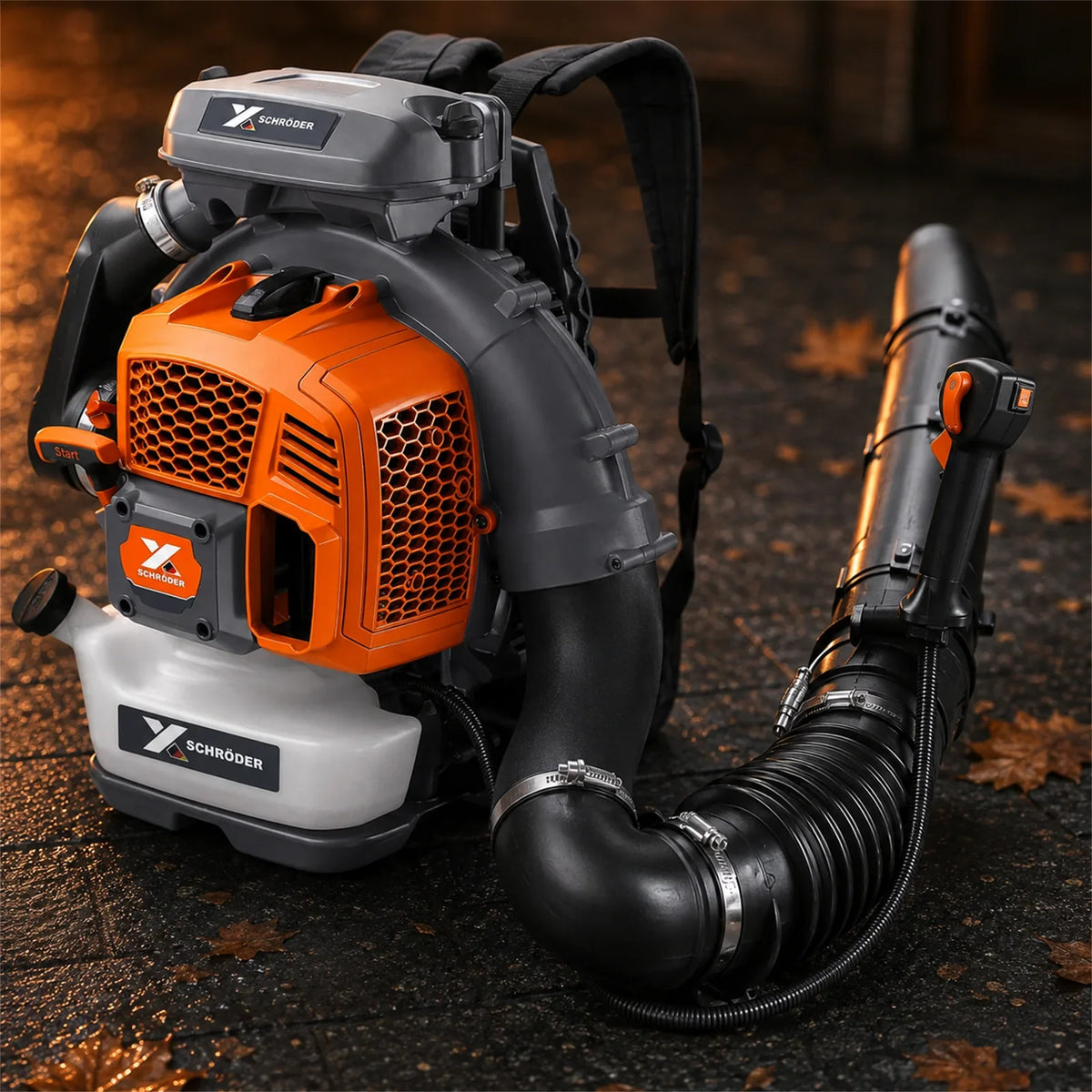
These are the published Canadian product ratings, not results from a side-by-side test performed for this article. They show that the SR-9900X has higher listed air volume and air speed. They do not establish a percentage improvement in cleanup time, fuel use or operator comfort.
When comparing other brands, check whether the figures describe the same type of measurement and attachment. If the page does not explain the conditions, ask the seller rather than assuming the numbers are directly interchangeable.
Bring the comparison back to your yard
Make a short note of the work: open lawn, paved drive, tight beds or a mixture. Then note the material: scattered dry leaves, a damp layer or a pile that has been sitting for weeks. This makes the comparison practical instead of abstract.
For example, a narrow path beside planted beds calls for careful control and a clear destination for the leaves. A larger open area may make broad clearing passes possible. The specification sheet will not make that decision for you. Our guide to blowing wet leaves looks at planning a difficult cleanup without relying on full throttle as the answer to everything.
Also compare the harness, controls, fuel capacity and access to model-matched replacement parts. Those details remain relevant after the initial purchase.
Common airflow questions
Should I buy by CFM alone?
No. It is one useful measure. Read air speed alongside it, then check the machine's format and suitability for your normal work. The largest rating is not automatically the best fit for a small or occasional job.
Will a higher MPH rating clear wet leaves every time?
No rating guarantees that. Saturated leaves, awkward surfaces and large compacted piles can require a different method or a rake. You are choosing a tool, not removing all the variables from outdoor work.
Ready to compare complete machines? Visit the Canadian blower lineup or watch the Schröder equipment videos.