
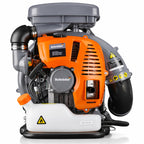
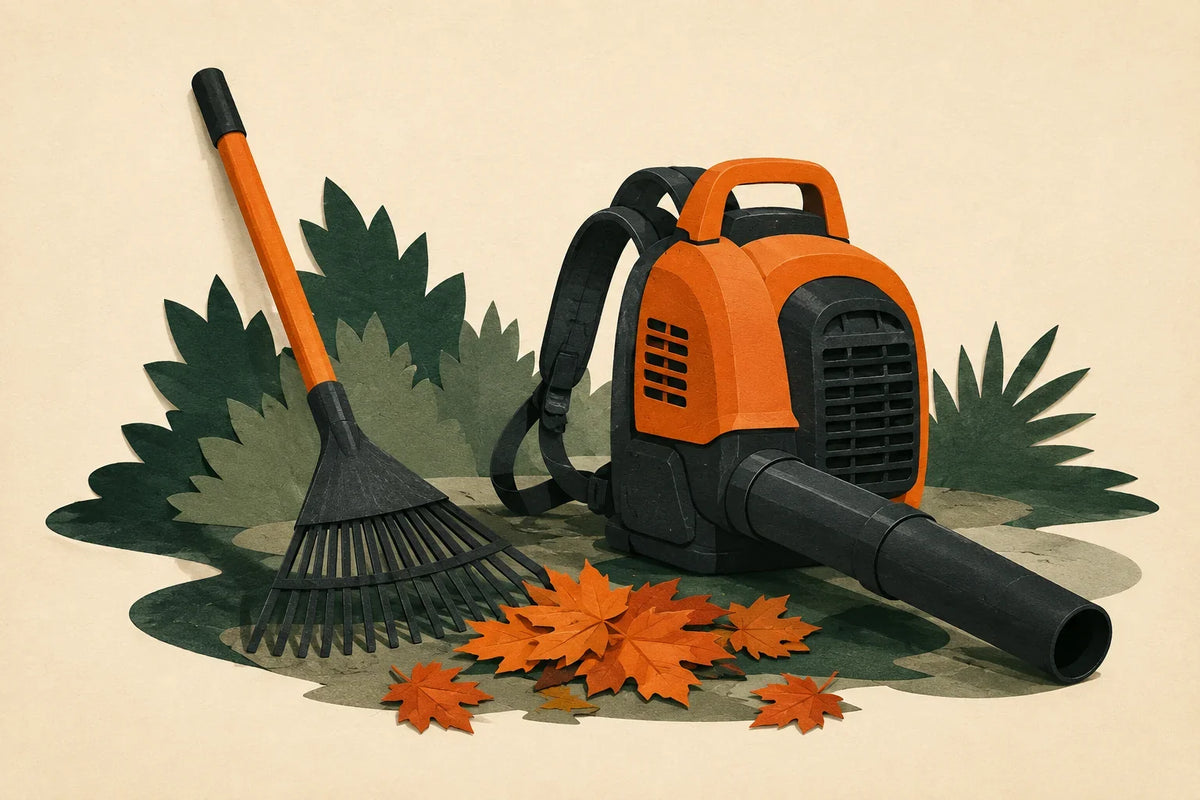
The useful answer to leaf blower vs rake is often “both, at different stages.” A blower moves loose leaves toward a collection area; a rake gives you close control around planting and helps gather the final pile. Choose the next tool by what the job needs, not by which one looks more powerful.
If you are buying your first blower, keep the rake. A powered tool does not eliminate bagging, careful border work or the need to decide where leaves belong. This guide helps you divide those tasks into a practical routine for a Canadian garden.
Start with the surface and the finish you want
Think about a front path, an open lawn and a planted border as three different jobs. The path needs to stay usable. The lawn may need leaves moved toward a collection point. The border may need only a careful tidy, with some leaf litter left alone. One technique does not have to cover all three.
| Task | Tool to consider | Reason |
|---|---|---|
| Scattered leaves on an open area | Blower | Direct the leaves toward a planned collection zone. |
| Leaves caught around delicate planting | Hand rake or careful hand collection | Choose exactly what to disturb. |
| A heavy, tangled pile | Rake and collection tools | Gather and load rather than repeatedly scattering it. |
| A small finishing job | Rake or broom | Use the tool already suited to the surface. |
Use the blower for movement, not endless rearranging
Give every pass a destination. Before starting, decide which edge of the lawn will become your collection zone and keep that zone out of access routes. If leaves are simply circling the property, stop and change the plan. More time with the engine running is not automatically more progress.
Read specifications as part of the purchase decision, not as a guaranteed time saving. Air volume and air speed measure different things. Our CFM vs MPH guide explains the distinction; the backpack blower collection lets you compare models.
Check whether powered equipment suits this location
Before buying, check the rules for your municipality, property and worksite, including permitted operating hours. If you cannot use a powered blower when the work needs doing, headline performance is beside the point. Rental properties and shared outdoor spaces may have additional arrangements to discuss with the owner.
Keep the rake for control and collection
A rake is useful when you need to draw material together without directing airflow through a whole area. It also belongs near your bags or compost collection point. Once the leaves have arrived there, the task has changed: you are gathering and loading, not clearing a route.
Decide whether an area needs clearing at all. Toronto's sustainable landscaping guidance describes leaf litter as part of garden habitat. That is a good reason to separate walking surfaces from natural beds in your cleanup plan.
Build a routine with a clear handover between tools
- MoveBring loose leaves toward a collection zone.
- GatherUse a rake to bring the remaining material together.
- LoadCollect the pile using suitable bags or containers.
- FinishCheck access routes and put equipment away.
For example, you might clear an open section first, stop the blower according to its manual, then work around the border with a hand tool. Finish the pile before moving to another zone. This is a planning example, not a claim that every property should follow the same sequence.
Wet conditions may change the balance between tools. Read our wet-leaf guide before treating a soaked mat like dry scattered leaves. The fall yard cleanup checklist covers collection planning and local disposal information.
Common leaf blower and rake questions
Will a blower replace all my hand tools?
No. Keep tools for precise work, loading and finishing. A blower is one part of a cleanup system, not a substitute for every task in it.
Which should I buy first?
Start with the work you regularly face and the tools you already have. If hand tools handle it comfortably, there is no need to buy on specification alone. If you are considering powered equipment, use our Canadian buying guide to compare the practical trade-offs.